
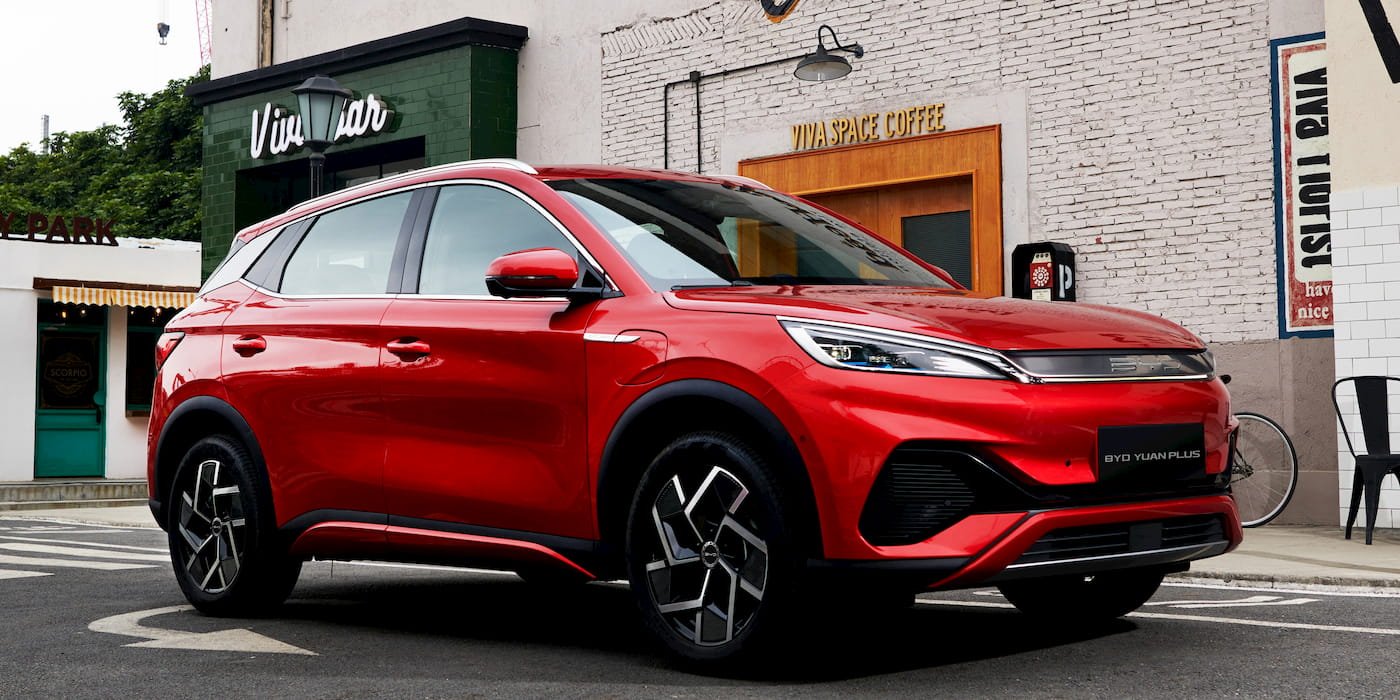
BYD Brings 5-Minute Flash Charging to Best-Selling EVs
In a major leap forward for EV infrastructure, Chinese automotive giant BYD is expanding its revolutionary Flash Charging system from luxury models to some of its most popular electric vehicles. The company has confirmed it will integrate the high-speed charging technology across multiple best-selling EVs in 2026—signaling a potential game-changer for consumer adoption and long-range travel convenience.
First introduced last year on the premium Denza Z9 GT, BYD’s Flash Charging system can replenish enough battery power for up to 400 km (250 miles) of range in just five minutes. Now, with demand surging and charging anxiety remaining a top barrier to EV adoption, BYD is bringing this capability to mainstream models—potentially including the best-selling Han, Tang, and Song Plus EV variants.
This move underscores BYD’s aggressive strategy to dominate not only vehicle sales but also next-generation battery and charging infrastructure. As global automakers scramble to match rapid-charging benchmarks, BYD’s vertical integration—from batteries to vehicles to service networks—gives it a distinct edge in scaling transformative technologies.
How BYD’s Flash Charging Works
Beyond just marketing hype, BYD’s Flash Charging relies on several key technological innovations working in concert:
- 800V High-Voltage Platform: Enables higher current without excessive heat buildup, allowing faster energy transfer.
- Lithium-Iron-Phosphate (LFP) Battery Enhancements: BYD’s proprietary Blade Battery and new electrolyte formulations improve thermal stability during ultra-fast charging.
- Intelligent Thermal Management System: Actively cools the battery pack in real time to maintain optimal temperature during high-power charging cycles.
- Smart Charging Protocol Coordination: Dynamically adjusts voltage and current based on battery state, ambient temperature, and degradation levels.
The system can handle peak charging powers up to 480 kW, though actual speeds depend on the state of charge (typically fastest between 20%–60%) and external factors like ambient temperature and charger capability.
Real-World Charging Scenarios
Beyond the headline-grabbing 5-minute burst, BYD provides more realistic expectations for everyday use:
- 20% to 80% in approximately 15 minutes on compatible DC fast chargers
- 10% to 80% in about 25 minutes
- 5-minute charge: Up to 400 km (250 mi) of range added—sufficient for most daily commutes or short road trips
[Image: BYD Han EV showing dashboard display with “Flash Charging Active” message and real-time range gain counter]
Rollout Strategy: From Luxury to Mass Market
BYD initially deployed Flash Charging in its Denza sub-brand—aimed at the premium segment. The Denza Z9 GT, for instance, offers this feature as standard equipment on higher trims. But with global competition intensifying—including Tesla’s 480 kW V4 Superchargers and Hyundai’s Ioniq 5 N with 800V architecture—BYD is now pushing the tech into its core product lines.
According to internal documents obtained by Electrek, BYD plans to equip at least three of its top five best-selling EVs in China and select export markets with Flash Charging hardware by Q3 2026. That includes:
- Song Plus EV: Likely first mass-market model to receive the upgrade
- Han EV: Mid-cycle refresh expected in late 2026 with Flash Charging standard on Pro and Flagship trims
- Tang EV: Updated variant targeting fleet and family segments
Notably, BYD will retain its standard 400V platform for entry-level models—balancing cost, complexity, and infrastructure readiness. Flash Charging will remain exclusive to vehicles with the updated 800V electrical architecture.
Beyond the Car: Building the Infrastructure Ecosystem
Flash Charging hardware is only as good as the supporting network—and BYD is investing heavily in both. The company operates over 3,000 dedicated charging stations across China under its “BYD Power” brand, with plans to expand globally.
In March 2026, BYD launched a new generation of 500 kW ultra-fast DC chargers, capable of delivering up to 1,000A at 800V. The units feature:
- Water-cooled cables for improved heat dissipation
- Modular power modules enabling future firmware upgrades
- Seamless integration with BYD’s energy management system for grid buffering
“Flash Charging isn’t just about speed—it’s about making EV ownership as seamless as refueling a gasoline car,” said Dr. Zhang Jun, BYD’s Chief Battery Engineer, in a recent technical briefing.
The Competitive Landscape
Beyond BYD, several automakers are racing to commercialize ultra-fast charging:
- Tesla: V4 Superchargers support up to 510 kW (though real-world speeds average ~250 kW)
- Porsche: 800V Taycan can charge at up to 270 kW with IONITY chargers
- Hyundai/Genesis/Kia: E-GMP platform supports 350–400 kW peak charging
- GWM: Ora Fastback (BYD’s China-market rival) also uses 800V architecture with ~4C batteries
But BYD remains the only major automaker to combine ultra-fast charging with LFP chemistry at scale—avoiding reliance on expensive cobalt or nickel while maintaining performance and safety.
What This Means for EV Adopters
The democratization of Flash Charging could significantly reduce range anxiety and travel time barriers. For urban drivers, a quick pit stop during coffee or lunch becomes enough to top off daily needs. For road-trippers, stops become comparable to traditional fueling intervals.
Critics note that widespread adoption depends on:
- Availability of compatible chargers (currently limited outside China and select EU corridors)
- Grid capacity in high-density areas
- Battery longevity concerns over thousands of ultra-fast cycles
BUT BYD reports that its new battery management algorithms limit degradation—claiming only a 2% capacity loss after 3,000 cycles, including hundreds of Flash Charging events.
The Bottom Line
BYD’s expansion of Flash Charging from luxury sedans to mass-market EVs marks a pivotal moment for the industry. If successful, it could redefine expectations around EV usability—making charging as fast and convenient as filling up at a gas station. As global EV sales surpass 15 million units annually, infrastructure innovations like this may be just what’s needed to accelerate adoption in regions where range and time are still top concerns.
Stay tuned for official announcements from BYD on model-specific Flash Charging availability—and whether the U.S. or European markets will get early access.
Further Reading:
Deep Dive: BYD’s Denza Z9 GT Flash Charging System | BYD’s Blade Battery Evolution: From Safety to Speed
Meta Description: BYD is rolling out its 5-minute Flash Charging system from luxury models like the Denza Z9 GT to best-selling EVs like the Han and Song Plus—ushering in a new era of ultra-fast charging accessibility.