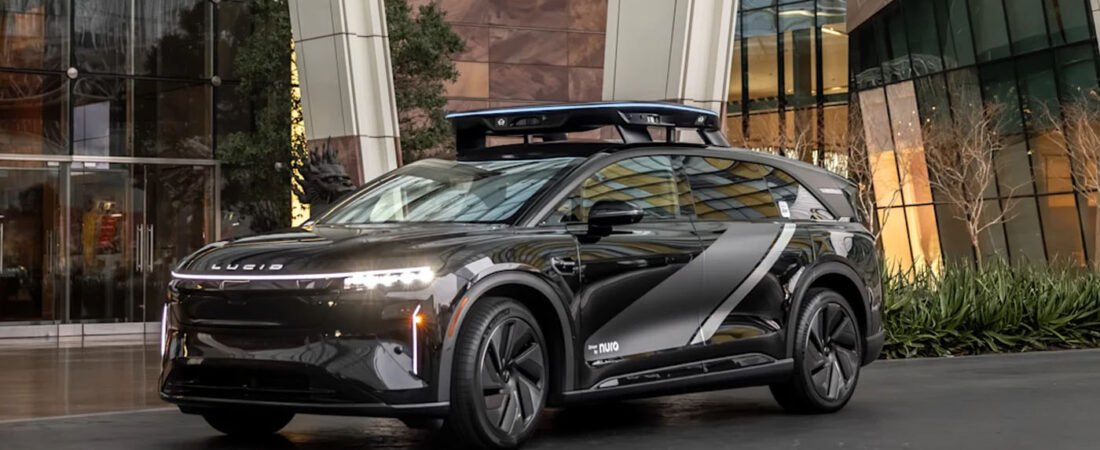
Lucid Motors Names New CEO Amid $1 Billion Funding Boost and Robotaxi Expansion
Lucid Motors has unveiled sweeping strategic changes as it seeks to reposition itself in the competitive EV marketplace. In a series of coordinated announcements this morning, the company confirmed Overland Park, Kansas–based investor and former Tesla executive Peter Arnold has been named CEO, effective immediately, replacing co-founder and former CEO Ted Ung. Simultaneously, Lucid revealed it had closed a massive $1.1 billion capital raise—comprising a registered public offering and increased commitments from key partners including Uber—to accelerate its path to profitability and scale up autonomous ride-hailing ambitions.
This move comes as Lucid faces mounting pressure from investors and market analysts to deliver consistent production volumes, reduce cash burn, and demonstrate a clear roadmap toward sustainable operations. The fresh capital injection, combined with new leadership, signals a pivotal inflection point for the company—especially as it prepares to launch its next-generation vehicles, including the highly anticipated Lucid Gravity SUV and a future autonomous-ready platform designed specifically for robotaxi deployment.
[Image: Lucid Air Sapphire in matte gray with “Next Chapter” banner overlay]
New Leadership at the Helm
Peter Arnold brings over two decades of automotive and financial leadership experience to Lucid. Most recently, he served as CEO of Arrowfield Capital Management, a private investment firm focused on mobility and clean energy. Prior to that, Arnold held senior roles at Tesla, including Director of Global Finance and Head of Strategic Initiatives during the Model 3 ramp—a period marked by intense operational pressure and ultimately, significant production scale-up.
In Lucid’s official statement, Arnold emphasized a renewed focus on execution and discipline:
“Our mission remains bold: to define the future of luxury electric mobility. But ambition without operational excellence is just a vision. This capital raise gives us runway—and the leadership team is committed to turning it into profitability, not just promise.”
The board of directors unanimously approved Arnold’s appointment after conducting an extensive search. Co-founder and Chief Technology Officer Mark Perry will remain in his role, continuing to lead vehicle development and battery innovation.
$1.1 Billion Capital Raise: Structure and Strategic Impact
Lucid confirmed the completion of a $750 million registered direct offering of common stock, priced at $2.40 per share—slightly below Monday’s closing price of $2.63. In addition, existing strategic investors—including ride-hailing giant Uber—increased their commitments by over $350 million through a combination of equity purchases and convertible notes.
The total proceeds of $1.1 billion+ will be allocated to three key areas:
- Product Acceleration: Scaling production at the Casa Grande, Arizona factory; accelerating Gravity SUV deliveries;
- Autonomous Development: Expanding Lucid’s in-house autonomous driving team and software stack for future robotaxi deployment;
- Operational Efficiency: Reducing overhead, optimizing supply chain logistics, and streamlining service infrastructure.
Analysts reacted with cautious optimism. Electrek’s Scooter Doll noted: “Arnold isn’t a typical EV startup CEO—he’s a turnaround veteran who’s been through the fire at Tesla. His deep ties to Uber could also accelerate Lucid’s robotaxi ambitions in ways pure-play automakers can’t.”
Roadmap for Robotaxis: From Prototype to Production
Lucid has long signaled its intent to enter the autonomous mobility space, and this funding round explicitly targets that goal. The company recently unveiled a prototype robotaxi based on the Lucid Air platform, equipped with an all-new Level 4 autonomous driving system developed in-house using NVIDIA’s DRIVE Orin chips and custom neural net models.
A key milestone is expected later this year: Lucid plans to begin limited fleet testing in select U.S. markets by Q4 2026, with Uber as a preferred commercial partner for vehicle management, dispatch, and maintenance.
What’s Next?
- Q3 2026: Begin delivery of the Lucid Gravity SUV (5-seater version)
- Q4 2026: Launch beta robotaxi testing with Uber in Austin and Phoenix
- 2027: Begin production of next-gen “Project Nova” platform—designed from the ground up for autonomy and ride-hail use cases
Arnold also confirmed Lucid is exploring partnerships beyond Uber, including potential collaborations with enterprise fleet operators and municipal transit agencies to deploy electric, autonomous shuttles in urban corridors.
Investor Reaction and Market Context
Lucid’s stock (LCID) surged over 18% in pre-market trading following the announcement—a strong vote of confidence from investors weary of repeated delays and production hiccups. Still, challenges remain: Lucid reported only 7,305 vehicle deliveries in 2025, well below its 14,000-unit target—and it burned through $1.9 billion in cash last year.
“The capital raise buys time,” said Melissaallo Le, senior EV analyst at BloombergNEF. “But Arnold’s real test will be translating funding into consistent output and margin improvement. Profitability isn’t just about cutting costs—it’s about selling more cars, faster.”
Lucid’s next earnings call is scheduled for May 2, where the company expects to provide updated guidance—including revised production targets and robotaxi timeline clarity.
Looking Ahead: Can Lucid Reclaim Momentum?
With Arnold at the wheel, Lucid enters a critical phase. The convergence of fresh capital, seasoned leadership, and a clear robotaxi vision could reignite investor confidence—if execution matches ambition.
As electric mobility shifts from “if” to “when” for autonomous ride-hailing, Lucid’s bet on vertical integration—building both the car *and* the software ecosystem—could pay off. But in an era where Rivian, Ford, and even Tesla are accelerating their AV timelines, speed-to-market may be the ultimate differentiator.
Stay tuned to Electrek for live updates from Lucid’s investor briefing later today.